
Project Description
Motivation: Inspired by the energy-saving campaign and the Energy Working Group, the goal is to develop and implement a technical infrastructure that automatically and regularly reads the heat and cooling meters on campus (EFS38-44) as well as on Sonnenstraße. The objective is to be able to analyze the impact of energy-saving measures more effectively and with greater granularity.
Technical Background: The buildings of the Dortmund University of Applied Sciences (FH Dortmund) on campus are supplied with district heating and cooling by TU Dortmund University. The amount of energy consumed is recorded individually for each building by heat and cooling meters and automatically read by TU Dortmund University via M-Bus and data loggers. TU Dortmund University intends to record only the total amount of heat supplied using a single meter; the heat and cooling meters in the individual buildings can then be used by the Dortmund University of Applied Sciences. The buildings on Sonnenstraße are supplied with district heating, which is recorded via a central heat meter.
Phase 1: January through June 2024
Procedure: The automatic data collection system is to be developed, tested, and implemented in phases. In the first phase, the heat meters will be read optically using a camera. The images captured at regular intervals will be temporarily stored on an SD card, and the meter readings will be recorded manually afterward. The advantage of this method is that it can be implemented quickly, allowing data to be collected for part of the current heating season.
Phase 2: Starting in July 2024
As of July 2024: In the first step, the heat meters were optically read using a camera. The images captured at regular intervals are temporarily stored on an SD card, and the meter readings are recorded manually afterward.
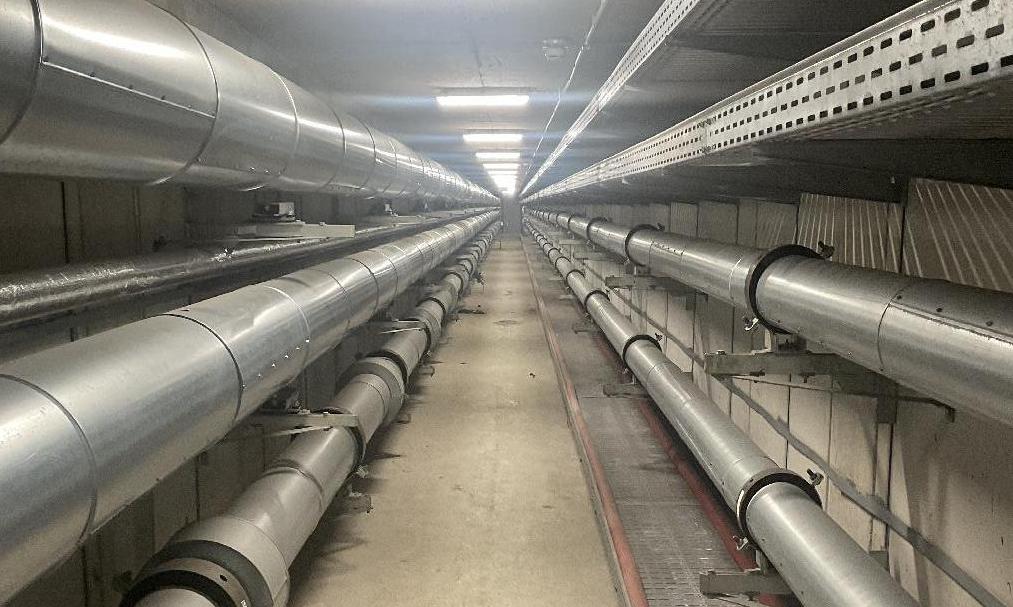
Procedure: The buildings of the Dortmund University of Applied Sciences (FH Dortmund) on campus are supplied with district heating (and district cooling) by TU Dortmund. TU Dortmund has already transferred some of the heat meters (EFS40, EFS40a, EFS42) to FH Dortmund. The meters in the EFS44 and in the supply duct are still required by TU Dortmund for billing purposes. These meters will be equipped with a second M-Bus card so that they can also be read automatically. Heat meters equipped with an M-Bus should be read via the designated interface. Data is transmitted over the network using the MQTT protocol.
As of June 2025: The remaining buildings on campus—EFS40 and EFS44—have been connected. The meter on Sonnenstraße has also been connected via LoRaWAN. The two meters in the utility tunnel were connected via an NB-IoT wireless connection. A total of 19 heat, cooling, and water meters are connected to the system.
Next possible steps: The data-reading procedure that has been developed can be expanded to include additional buildings such as JVF and MOP. First, it must be determined whether a suitable interface is available; if not, appropriate hardware must be procured or developed.