
Subproject: Development of a traceable control system and an optional cloud synchronization feature for a modular, vendor-neutral energy control and management system
Project Description
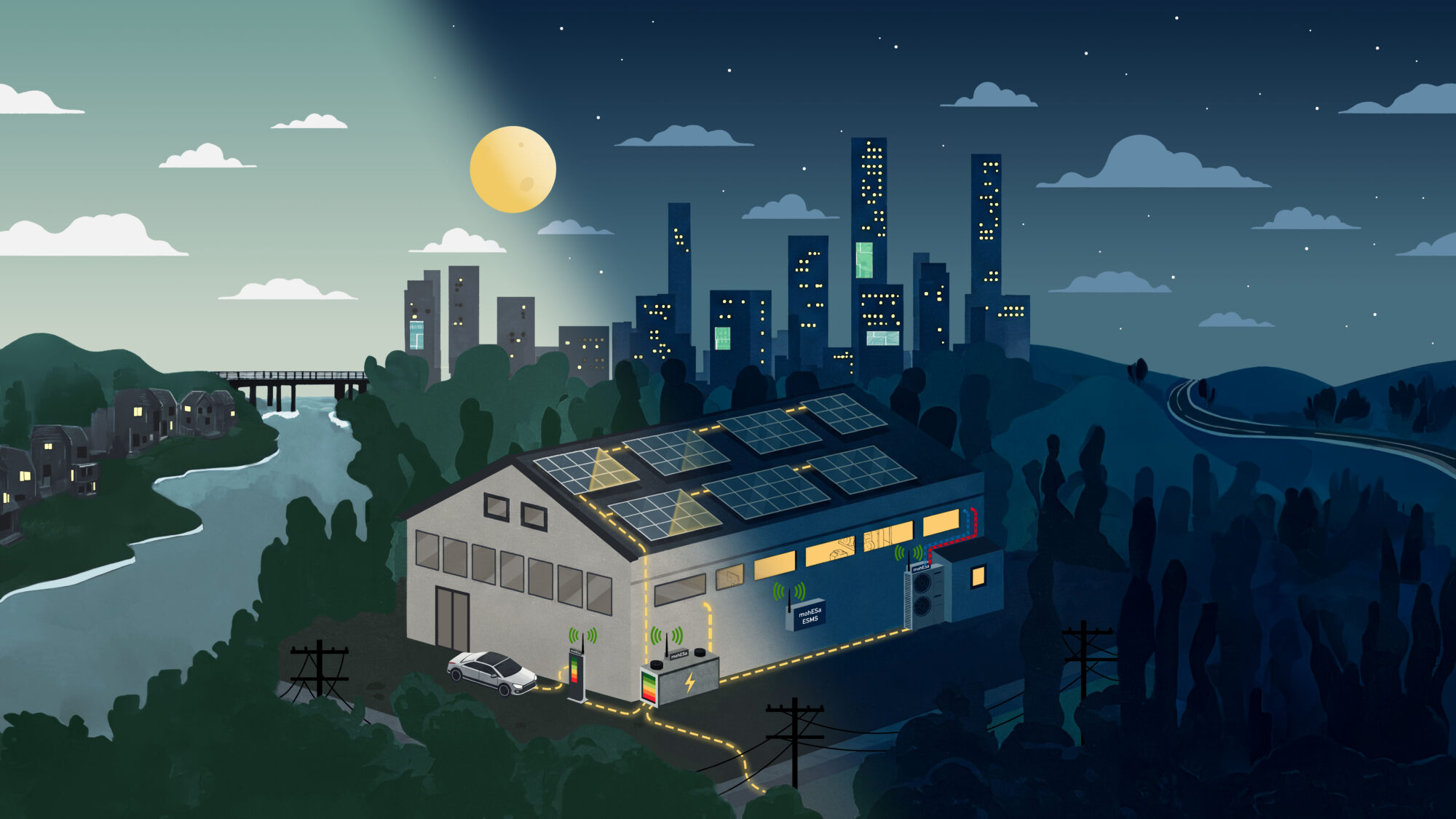
The mohESa project is developing a control system to optimize electrical and thermal energy flows in commercial buildings. The system emphasizes vendor neutrality, features a modular design, and is easily retrofittable. Communication between the geographically distributed modules will be based on long-range wireless technologies. By supporting open standards, the system developed in mohESa can be expanded by third-party providers. Another key focus of mohESa is self-sufficient operation (off-grid capability). Connection to or synchronization with a cloud service on the Internet is optional and serves to enhance performance through the anonymous exchange of operating parameters.
Project Motivation
Against the backdrop of the climate crisis, the generation and management of renewable energy, as well as sustainable heating, are taking on central importance. Many small and medium-sized enterprises (SMEs) are therefore already investing in the generation of renewable energy through photovoltaics, in electric mobility, and in sustainable heat generation—for example, using heat pumps, solar thermal systems, or district heating (biogas plants, geothermal energy, industrial waste heat, etc.). This is intended, on the one hand, to ensure independence from fluctuating energy prices and, on the other hand, to bridge potential blackouts (grid outages).
The systems available on the market are mostly technologically self-contained. For example, a photovoltaic system is either configured once by the installer during the initial installation or offers a connection to the manufacturer’s cloud. Apps connected to the cloud are then used more for monitoring the system (e.g., reading the current grid feed-in) than for the end user (SME employees) to intuitively adjust operating parameters. Furthermore, integration with, for example, a third-party heat pump is not provided for.
To ensure the optimal use of all components within an SME, an overarching system is therefore necessary—one that places the relevant components within an overall context and can align them with the company’s needs. Such systems are referred to as energy management systems (EMS). The market already offers a wide variety of EMS solutions. However, these—with varying scopes of functionality—typically target the facility management (FM) needs of larger companies. In this scenario, the EMS is installed, configured, and maintained by energy managers within the facility management department.
In contrast, mohESa is designed for companies without a separate facility management department or dedicated energy managers. A local wireless network is formed using easy-to-install interface modules that connect to the components in use, such as photovoltaic systems or heat pumps. The central component here is the Energy Control and Management System (ESMS).
Duration
April 2024 to September 2026
Project Partner

Funding
Funding Code
KK5119003GM3